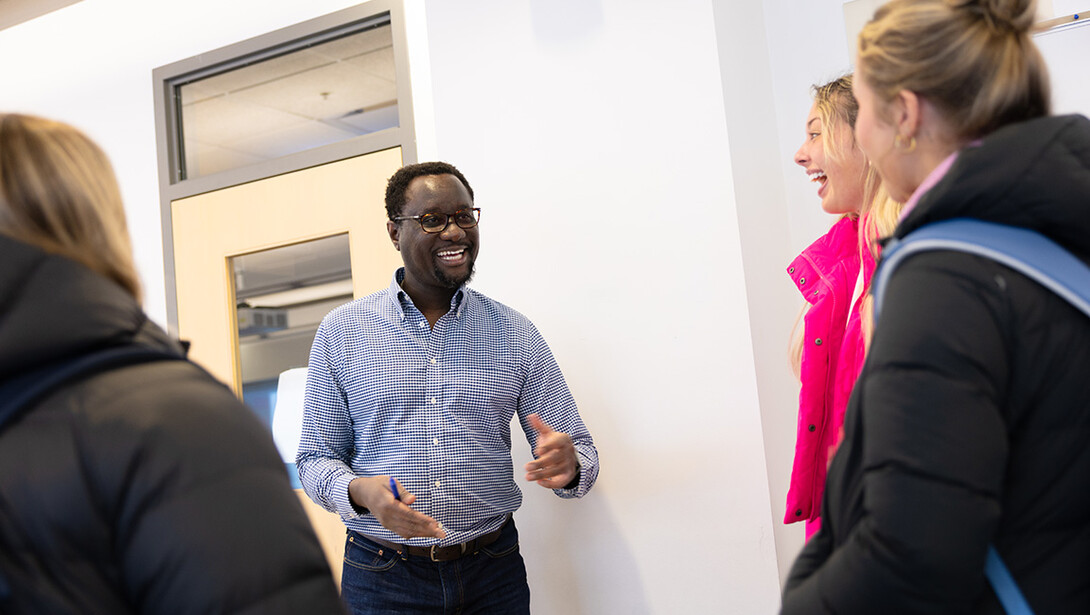
Dane Kiambi remembers the helplessness vividly. In 2014, his father was diagnosed with cancer in Kenya, where limited medical resources, and an insurance system that often left patients abandoned, meant every appointment required hours of travel, hired drivers and constant coordination by Kiambi, from halfway around the world.
Two years later, his father was gone. When his mother received the same diagnosis in 2020, the cycle — long trips to Nairobi, out-of-pocket payments, and a patchwork of support — began again. She died in 2022.
Their journeys left Kiambi, associate professor in the College of Journalism and Mass Communications, with a question that lingered long after the grief settled: How could he turn this pain into something purposeful?
The answer emerged in his classroom.
Kiambi has intentionally structured his courses around partnerships with cancer-fighting nonprofits. His students have worked with the Lymphoma Research Foundation, winning first place nationally in the 2022 Public Relations Student Society of America Bateman Case Study Competition. In spring 2024, his students partnered with Angels Among Us, an Omaha organization supporting families of children undergoing cancer treatment in Nebraska.
Most recently, Kiambi's public relations capstone course partnered with the Lymphoma Research Foundation again to launch the Foundation's new Collegiate Champion Program. The program invites college students nationwide to deliver the Foundation's resources to oncology clinics in their communities and help raise funds for lymphoma research and patient services.
For Kiambi, who specializes in strategic communication, the missions of these organizations are deeply personal.
"Resources going directly to communities, to clinics where patients are receiving care, and that's exactly what my parents lacked," he said. "They were hours away from specialists. There was no local support system, no one bringing educational materials or connecting families with resources. If programs like this had existed in Kenya, maybe their journey would have been less isolating and less tormenting for me.”
Each oncology appointment meant arranging transportation, coordinating helpers, ensuring his parents understood complex medical information, and finding a way to pay for everything, all while Kiambi managed their care from the United States, where he was teaching.
"The financial burden was crushing, but the logistical burden was almost worse," Kiambi said. "Finding people to take them to appointments, making sure they understood what doctors were telling them, these are things a Collegiate Champion Program might help with. My parents had none of that infrastructure."
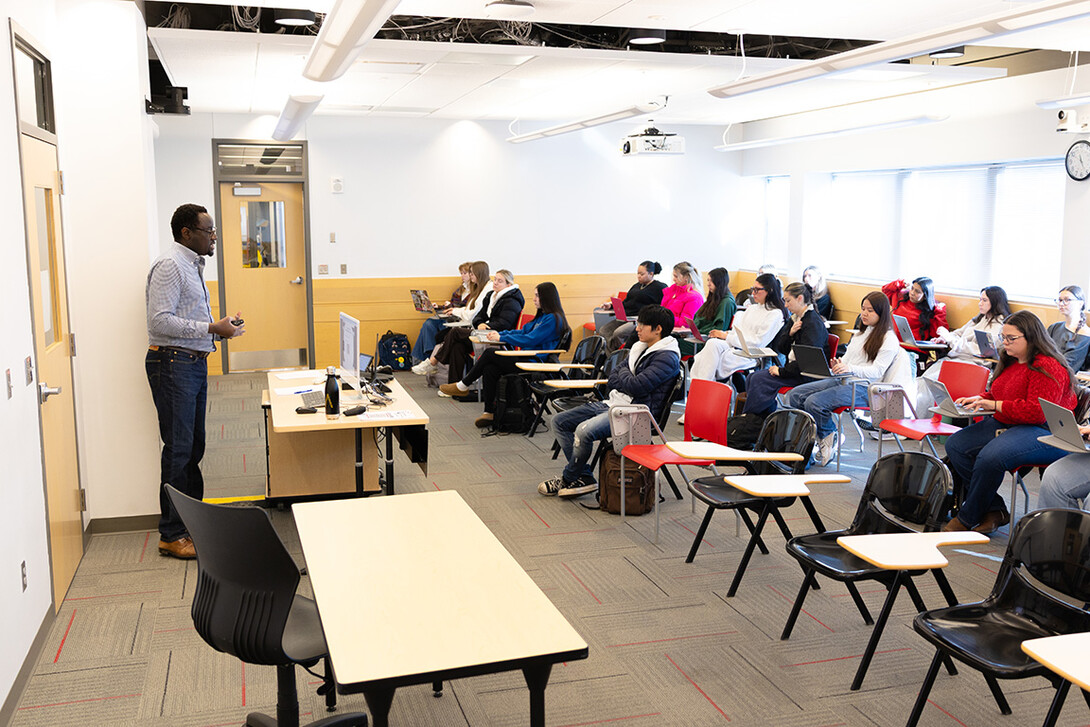
Those experiences — the isolation, the lack of community resources, the financial devastation, the geographic barriers — now inform every partnership Kiambi seeks for his students.
"When you've watched your parents struggle through cancer treatment with inadequate resources, you understand viscerally why these organizations matter," Kiambi said. "Every campaign my students create is potentially helping families who are living through what my family lived through."
Each partnership serves dual purposes: Students gain real-world experience in a growing professional field, while organizations receive strategic communication support. According to the Bureau of Labor Statistics, the nonprofit sector is experiencing significant growth, and continued job growth is projected over the next decade.
Kiambi is transparent with students about why he seeks these partnerships, often sharing his story on the first day of class.
"In Kenyan culture, we honor our ancestors by carrying forward their values and ensuring their struggles weren't in vain," he said. "My parents didn't have access to the kind of sophisticated support systems these nonprofits provide. But through the students' work, maybe other families will."
He plans to continue centering his courses around cancer nonprofits, expanding partner organizations, and deepening student engagement.
"Cancer took my parents, but it gave me clarity about how I want to use my platform as an educator," Kiambi said. "My students are learning essential professional skills — stakeholder mapping, strategic messaging, crisis communication — but they're learning them in service of something that saves lives."