As artificial intelligence continues to advance and becomes seemingly more sophisticated by the day, it presents new possibilities across many fields and industries, particularly within the telecommunications industry. However, despite its vast potential benefits, operators at major network providers remain skeptical of its reliability and hesitant to adopt it in practice.
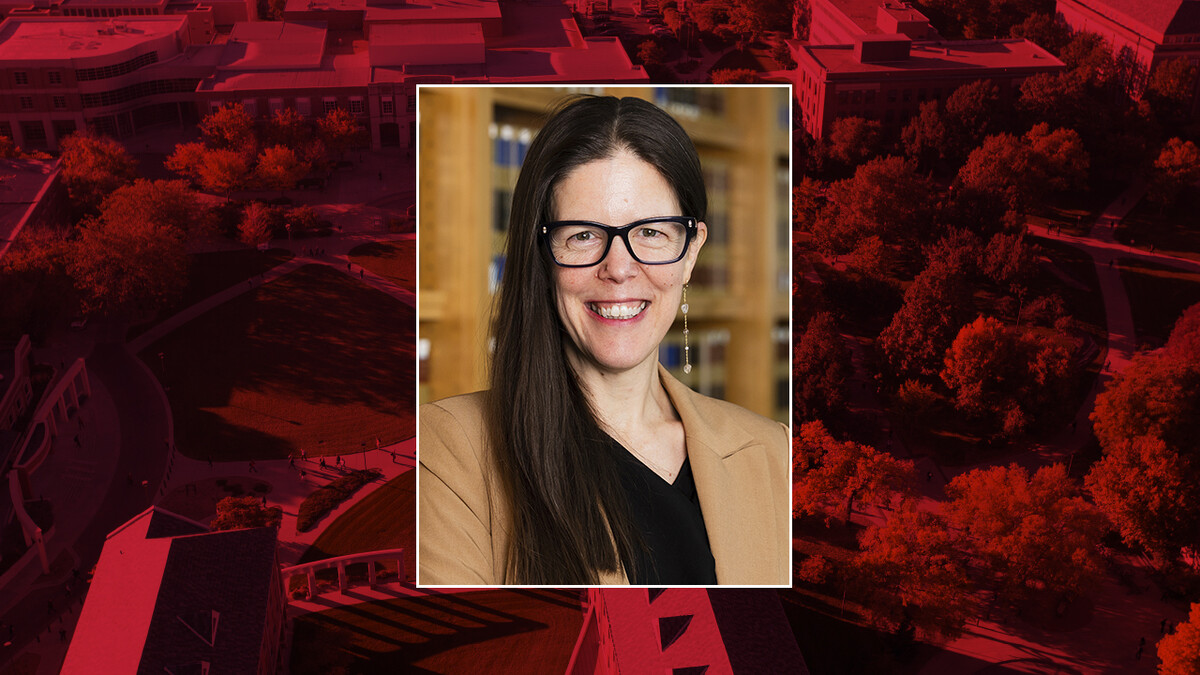
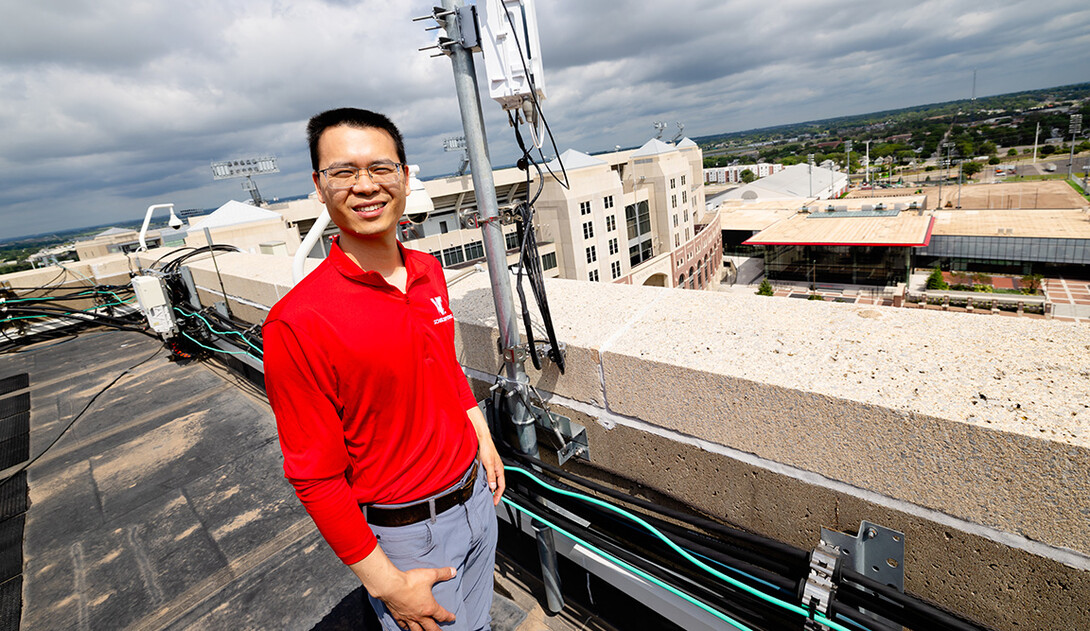
Qiang Liu, assistant professor in the University of Nebraska–Lincoln's School of Computing, aims to solve this issue with a new research endeavor that will help make AI-based technology tools more trustworthy. His project will be funded by a $750,000 grant from the National Science Foundation’s Faculty Early Career Development Program, which supports pre-tenure faculty who exemplify the role of teacher-scholars through outstanding research, excellent education, and the integration of education and research.
Liu's CAREER award research will specifically focus on developing safer and more reliable AI-native solutions for next-generation mobile networks while creating new educational opportunities for students and bridging the digital divide across Nebraska.
Companies like NVIDIA and Nokia are making major investments in the development of AI-driven solutions and infrastructures, recognizing that existing AI techniques show promising ability to optimize network performance by improving throughput, latency, robustness and efficiency, particularly in larger networks that can be difficult to manage manually. However, the risk of algorithms failing to safely adapt under unpredictable and evolving network dynamics still continues to prevent the telecommunications industry from fully embracing AI-assisted network automation.
“Everyone's using AI, and they want to use it, and the performance looks great in the testbed, but they still don’t trust it,” Liu said. “We will do the research that will make it trustworthy, so that they can use it and adopt it in production. They can serve more users with the same resources and infrastructure.”
Liu’s initiative aims to achieve “network autonomy,” or the ability of mobile networks to safely manage and optimize themselves in real time using AI and machine learning methods. The initiative will include three specific goals: developing digital network twins that accurately mirror real-world wireless systems for testing, designing deep learning methods to automate resource allocation safely and building explanation-guided AI frameworks that will help engineers understand why systems make certain decisions and enable them to provide more constructive feedback to AI agents.
In addition to enhancing next-generation wireless technology, Liu’s project aims to develop a next-generation STEM workforce. This includes engaging students at the K-12 level, offering more research opportunities at the collegiate level and establishing a Graduate Connect Program that will support students throughout their educational experience.
To implement these goals on campus, Liu will revisit one of his previous research initiatives, Husker-Net, the University of Nebraska–Lincoln’s own private 5G network. Husker-Net, which has mostly been used for research efforts thus far, will become a campuswide platform for new wireless networking initiatives and courses. By increasing access to the network, Liu hopes to provide more hands-on participation opportunities for students interested in telecommunications and AI research.
“We will enhance Husker-Net to better fit wireless- and edge-computing-related course needs,” Liu said. “We want to expand to students and new project users. We can facilitate outdoor scientific research on campus that involves wireless connectivity, and then their contributions will help us do better research."
Liu’s project also includes a broader educational mission that extends beyond the university campus. He plans to launch a virtual “Hour of Code” program for K-12 students in rural communities across Nebraska where travel to in-person events may not be an option. He envisions offering not only Zoom alternatives, but a virtual reality “playground” that realistically replicates the live demos happening at Nebraska Innovation Campus.
Liu said the combined research and education efforts are intended to strengthen Nebraska’s technology workforce by training and retaining local talent while also ensuring students in rural areas have greater access to STEM opportunities.
“In the middle of Nebraska, they may need to drive four hours a day to attend this event and go back, so we’ll try to expand and make it virtual,” Liu said. “We want to engage and inspire students, and not only the local students and their parents, but also those who are remote in Nebraska.”
This is just one way Liu intends to achieve the important goal of mitigating the digital divide in Nebraska and other rural communities across America. Increasing network access, he said, also increases opportunities in many other aspects of daily life.
“Access to the network is always one part of the digital divide, and the lack of infrastructures in rural areas contributes to the divide in general, not just in connecting to the Wi-Fi or the internet,” Liu said. "Once you have the network, you can do a lot of things, but if you don’t have it, a lot of things cannot happen.”
Liu said while he is pleased to be the recipient of a CAREER award, he is more excited about the opportunity to resolve real-world problems within the technology industry and Nebraska communities, which could make a major positive impact on many other industries and people throughout the world.
“This has stemmed from real, pressing industry needs, and it’s a big industry problem, so if we can actually generate something that’s very valuable, it will be applied and thus impact millions of people,” Liu said.
Share
News Release Contact(s)
Tags
High Resolution Photos
HIGH RESOLUTION PHOTOS