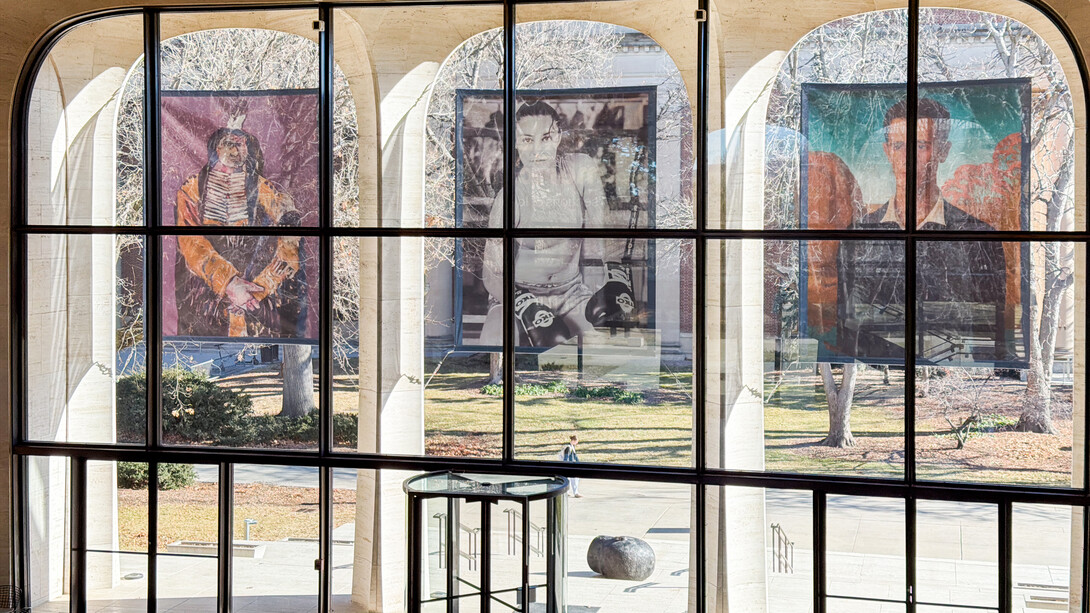
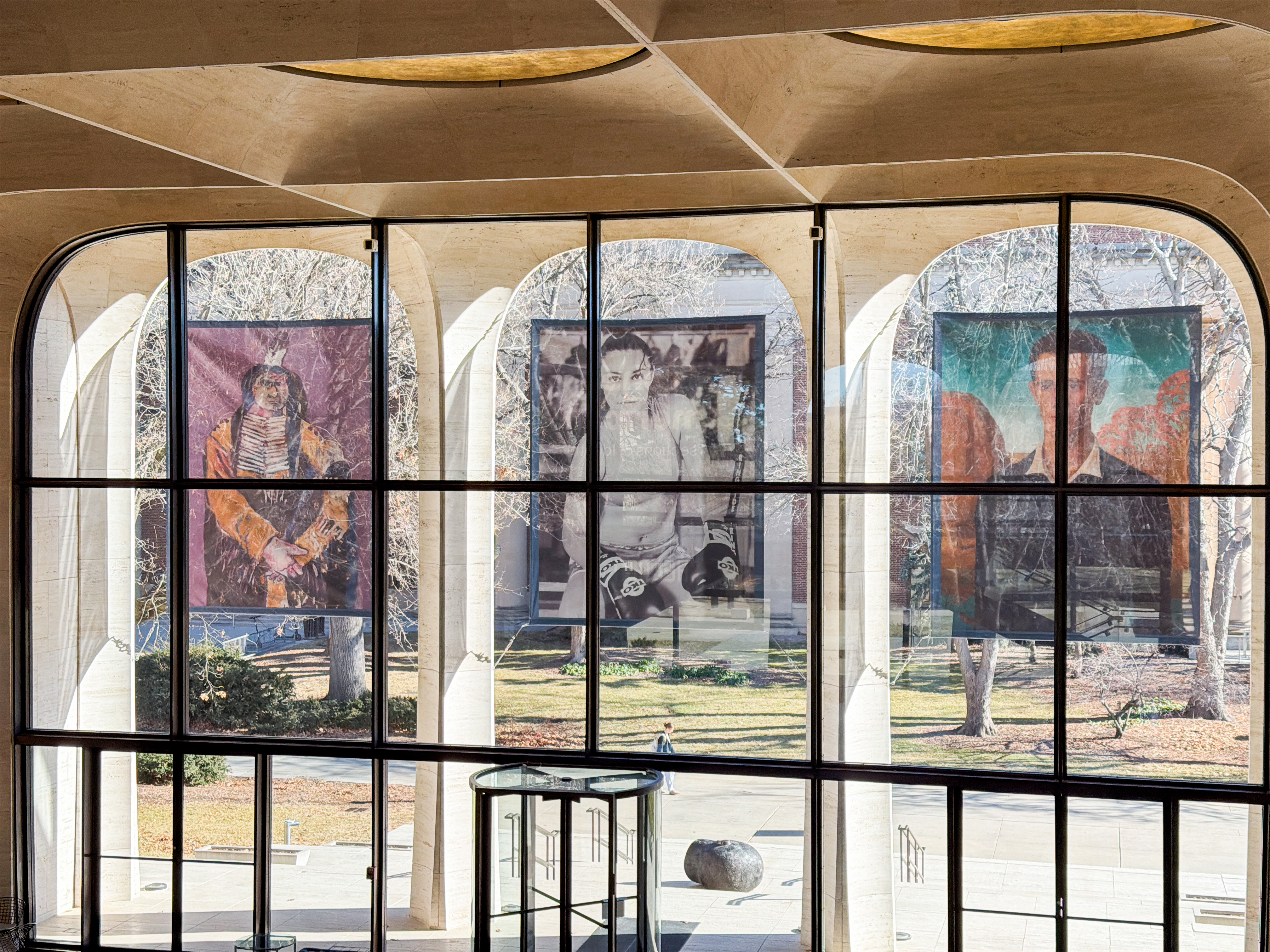
In celebration of the 250th anniversary of the signing of the Declaration of Independence, Sheldon Museum of Art at the University of Nebraska–Lincoln presents the exhibition “Hyphen American: Intersections of Identity.” The show, which runs from Jan. 24 through July 5, comprises works from the museum’s collection that demonstrate ways in which American experience and identity are explored in art.
The exhibition is inspired by Lincoln’s recent four-star Certified Welcoming designation awarded by the Welcoming America organization. The exhibition and its accompanying catalogue are presented in the four languages most spoken in Lincoln: English, Spanish, Vietnamese and Arabic.
Throughout the run of the exhibition, Sheldon will host a series of public programs organized in collaboration with a coordinating committee of community members, several of whom contributed written statements to the exhibition catalogue. Organizations represented on the committee include the Asian Community and Cultural Center, Center for Great Plains Studies, Civic Nebraska, ECHO Collective, Lincoln Commission on Human Rights, Lincoln Indian Center, Southeast Community College, University of Nebraska–Lincoln Libraries and Youth 250.
Christian Wurst, associate curator for exhibitions at Sheldon, organized the exhibition and edited the catalogue. He describes both as opportunities to “celebrate our unique histories, communities and individual forms of expression that contribute to the American social fabric. All distinct, yet all American.”
Wurst organized the exhibition into three thematic sections: self-presentations, depictions of histories and struggles, and the formation of communities and rituals. “While parallel stories may emerge, the works in the exhibition communicate the kind of Americanness that does not require unity or assimilation,” he said.
Self-presentations
The works in this theme examine the variety of ways that Americans visually represent themselves: a particular way of dressing, a setting, or a pose in a painting or photograph can communicate one’s cultural heritage, gender expression or socio-economic status. This section also explores how artists portray members of their communities.
The artists whose works are included in this gallery are Richard Avedon, Alexander Brook, Kelli Connell, Binh Danh, Nykelle DeVivo, Thomas Eakins, Wanda Ewing, James Gobel, Aaron Holz, Walt Kuhn, Dorothea Lange, Vivian Maier, Delilah Montoya, Catherine Opie, Fritz Scholder, Louis Sloan, Raphael Soyer, Renée Stout, Will Wilson and Grant Wood.
Histories and struggles
In this gallery, works speak to the histories and traumas that are enmeshed in the fabric of national identity. The artists include Carlos Alfonzo, Radcliffe Bailey, John Steuart Curry, Nona Faustine, Nicholas Galanin, Lewis W. Hine, Dorothea Lange, Alfred Stieglitz, Reginald Sylvester II, Hank Willis Thomas and Kara Walker.
Community and rituals
Two key aspects of community are examined in this gallery: the everyday and the celebratory. Routine interactions with others in the community cement relationships and individual identities. These connections, particularly familial ones, are further solidified by gatherings for significant events such as weddings, birthdays and funerals. The artists in this gallery commemorate moments when identity is not explicitly stated but performed.
The artists are José Rosa Castellanos, Binh Danh, Bruce Conner, Christina Fernandez, Carmen Lomas Garza, Alexandre Hogue, Luis Alfonso Jimenez, Consuelo Kanaga, Jacob Lawrence, Hung Liu, Gordon Parks, Jaune Quick-to-See Smith, Paul Anthony Smith, Alec Soth, Bill Traylor, James VanDerZee and Manuel Vega.
Share
News Release Contact(s)
Tags
High Resolution Photos
HIGH RESOLUTION PHOTOS