Welcome to Pocket Science: a glimpse at recent research from Husker scientists and engineers. For those who want to quickly learn the “What,” “So what” and “Now what” of Husker research.
What?

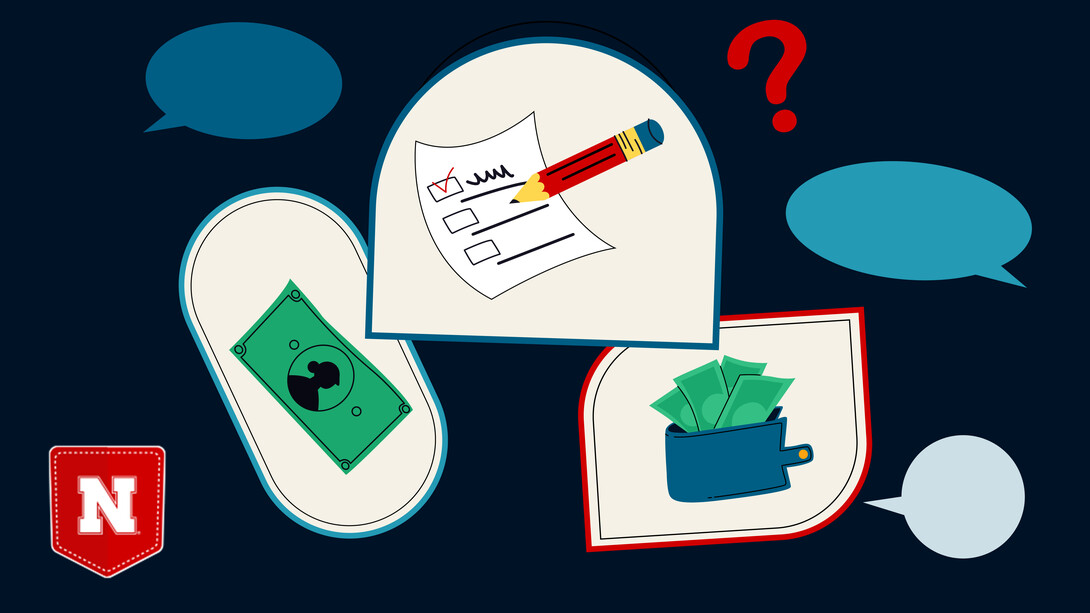
Survey research is an important tool for capturing public opinion. Social scientists, market researchers, policy makers and more rely on surveys to capture the big picture of the public’s perception.
But the data gleaned from a survey largely depends on its response rate, and researchers have included monetary incentives in survey mailings to encourage participation. Initial incentives have shown success, but less is known about the effectiveness of follow-up incentives. Could a few more dollars help boost response rates?
So what?
A recent study from scholars in the University of Nebraska–Lincoln’s Bureau of Sociological Research shows that yes, a sequential incentive can help response rates but less might be more.
They performed an experiment using a general‑population survey mailed to Nebraska households in which the initial mailing included a $1 incentive. Nonrespondents then received an additional $0, $1, $2, or $5 in a subsequent mailing.
Sequential incentives increased response rates overall, and offering another $2 or $5 increased response rates, but were statistically the same. The data suggests that more than doubling the incentive — to more than $2 — likely won’t help response rates and is a higher expense for researchers.
The most cost-effective sequential incentive, the authors write, is likely around $2, and $1 may be sufficient. Additionally, offering another incentive did not speed up data collection or change the composition of the survey sample.
Now what?
The researchers note that the sequential incentives in the experiment were small, capped at $5, and that the initial offering was $1. Future research could explore whether higher incentives would boost response rates.
The sample for this study was also limited to English-speaking Nebraska adults. The study’s authors suggest future research should include other geographic areas and multilingual surveys.