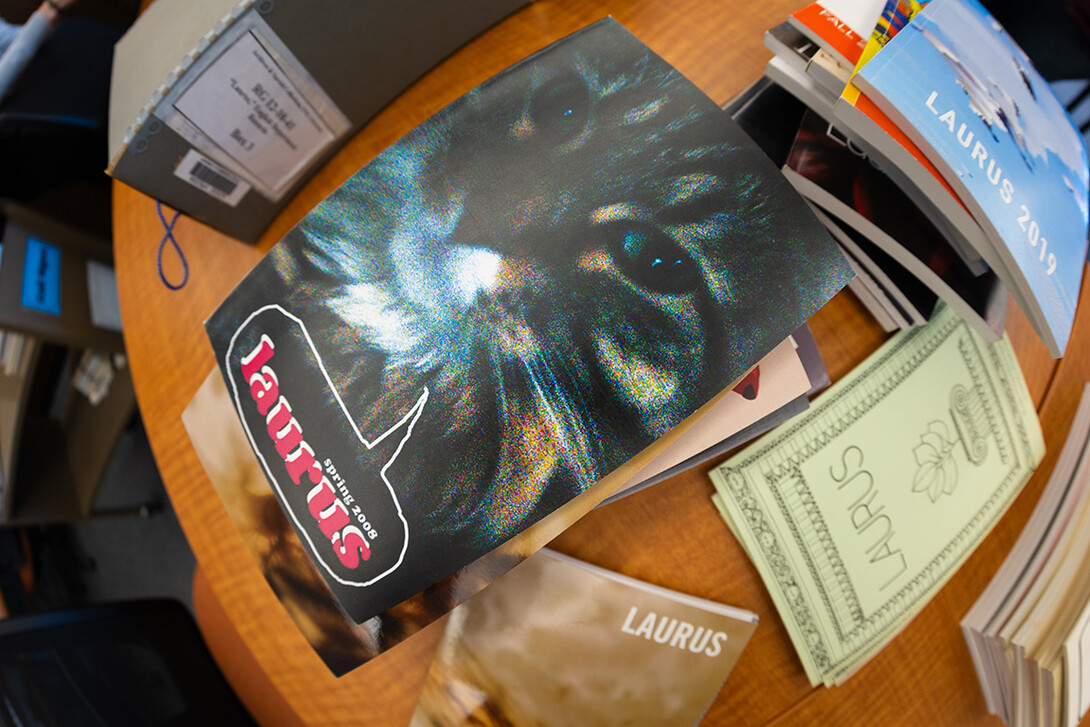
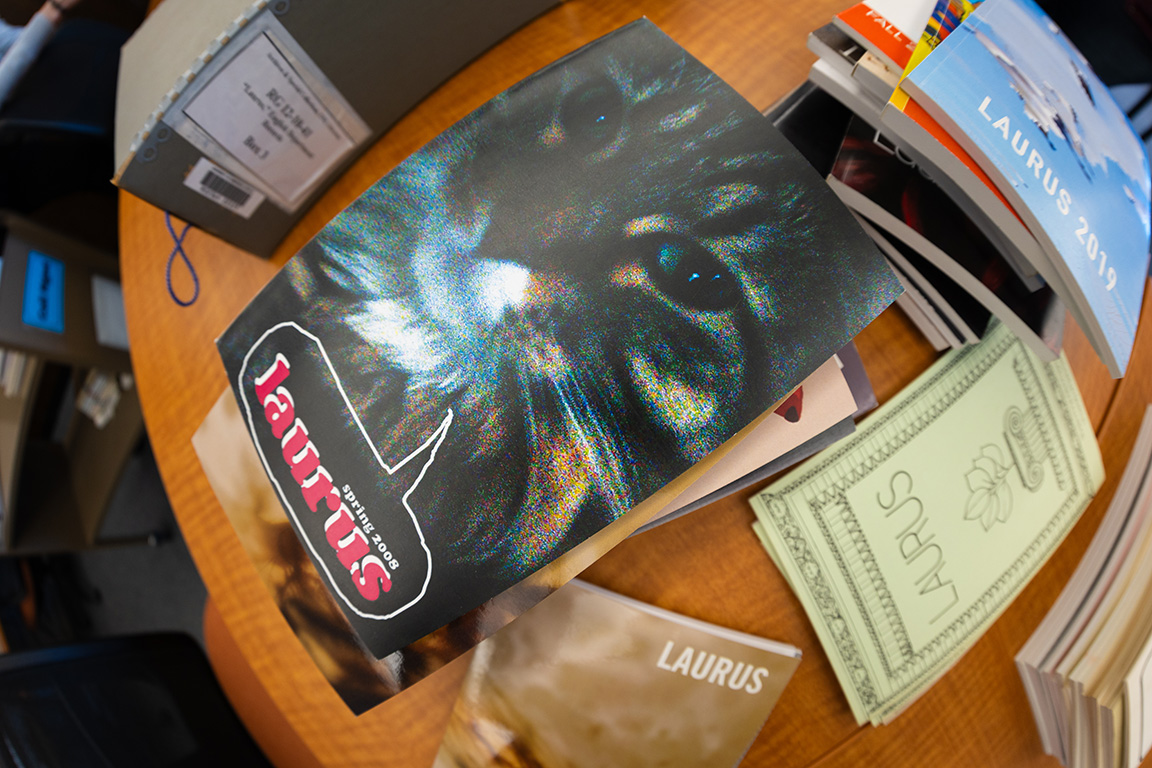
For more than 40 years, "Laurus," the University of Nebraska–Lincoln’s undergraduate literary magazine, has been a launchpad for emerging writers and artists, but past issues have largely disappeared into small libraries and personal collections.
Soon, the magazine’s legacy as an incubator for the future of literature will be accessible to all through a digitization project that will publish past issues online.
Since its first issue in 1983, "Laurus" has featured early works by now-acclaimed writers including Timothy Schaffert, Amil Quayle, Amy Knox Brown, James Cihlar, Erin Flanagan, Rainbow Rowell and Danielle Luther-Luebbe. It has also been shaped by student editors who went on to prominence, such as Pulitzer Prize finalist Lee Martin.

The digitization effort was devised and is being led by Pascha Stevenson, "Laurus" adviser and assistant professor of practice in English, who realized upon taking the helm that issues had never been archived.
“If anything happened, we'd lose all of that history, which just felt pretty painful to think about,” Stevenson said.
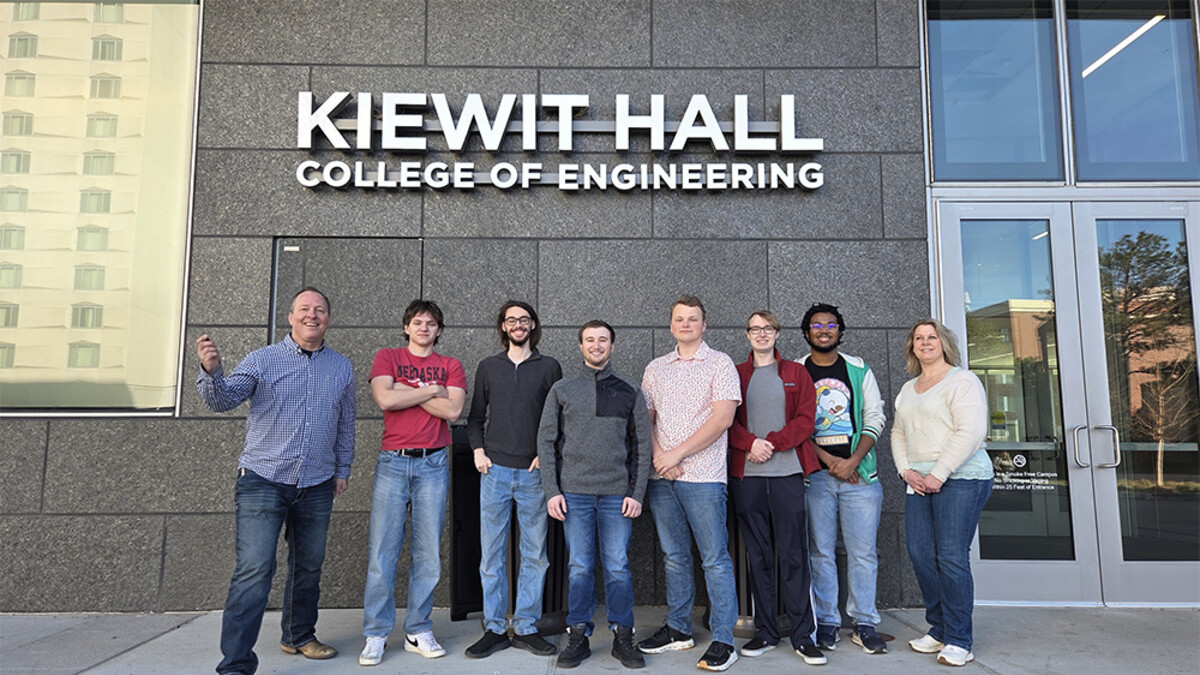
Mirhuanda Meeks, administrative assistant, Rose Wright, a student worker, and Emily Yelden, editor of "Laurus," searched for old issues in Bailey Library and Andrews Hall storage. They located every issue but one — 1994. Yelden organized the issues and prepared them for transfer. Stevenson met with department leadership and University Libraries archivists to plan the digitization.
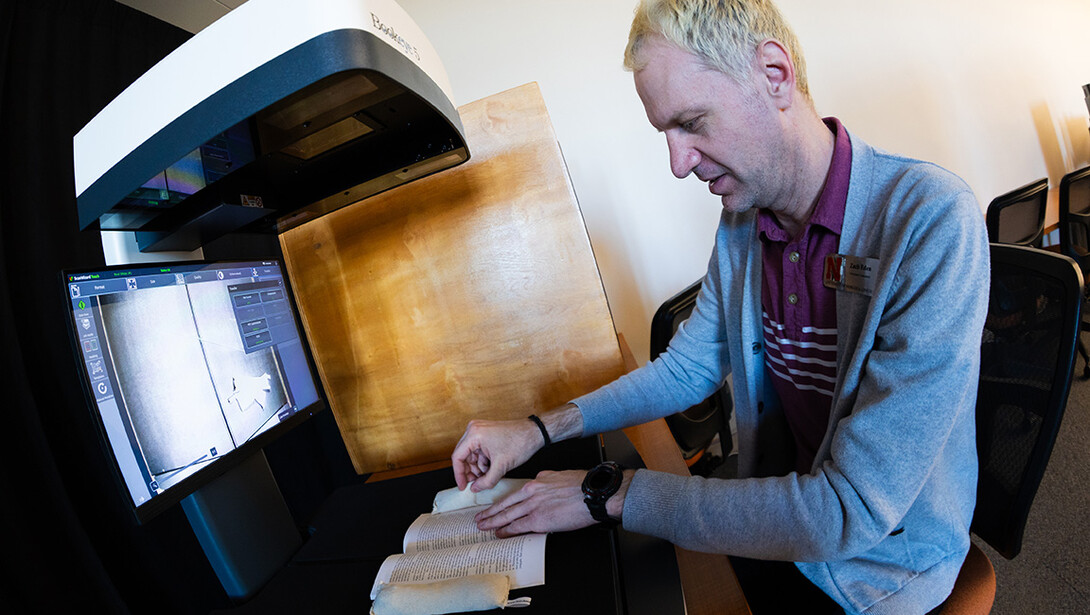
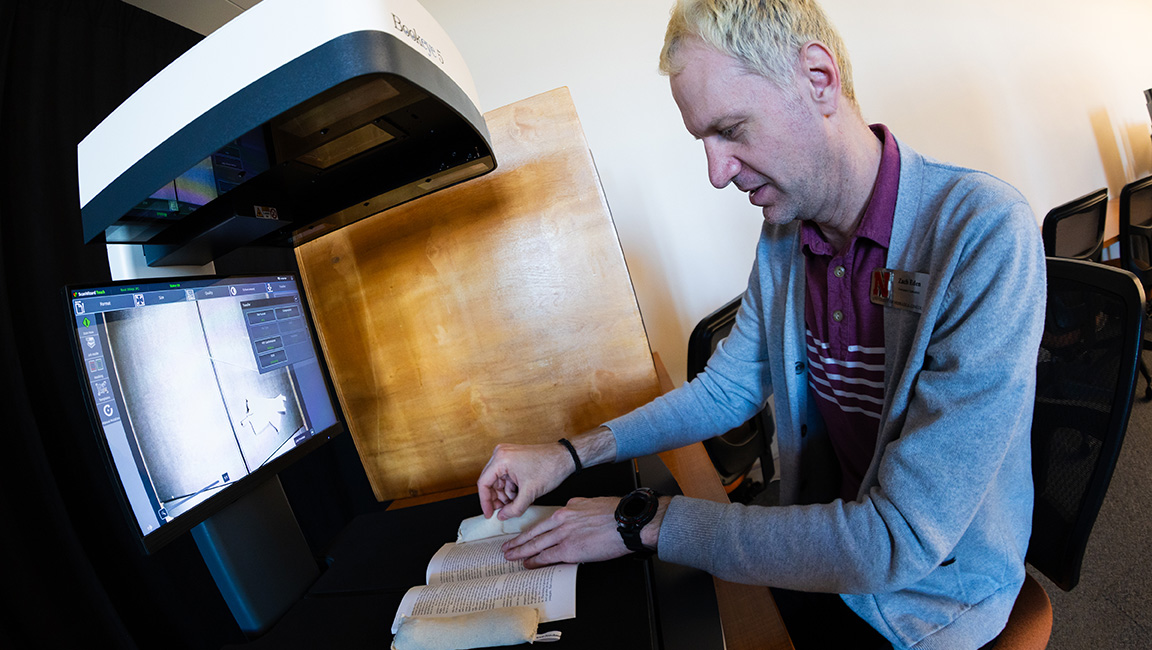
With help from the Libraries’ Archives and Special Collections and collection management teams, all "Laurus" issues will be available on the Digital Commons, the university’s online repository, and added to the digital archives. Copies are being scanned, uploaded, transcribed and cataloged for searchability. Michael Straatmann, associate director for collection management in the Libraries, said the project is expected to be complete by fall.
“It’s a really cool project for us, and I’m excited we’re able to do it,” Straatmann said.
Stevenson worked with the executive editorial team, made up entirely of undergraduate students, to decide how the online issues would be presented.
“The team has been really great about weighing in on these pivotal choices we have to make about accessibility and where it goes,” she said.
Alumni who do not want their works published online can opt out by contacting the "Laurus" team at laurusmagazine@gmail.com.
“We realize that people did not originally know when they published in 'Laurus' that the world would change, and we'd have the internet and things would be digitized and totally accessible,” Stevenson said.
At the same time, Stevenson is building a website for the magazine, and student editors are producing essays highlighting well-known authors who first appeared in "Laurus." Bella Hardy, a senior and editor-in-chief, published the first essay on Nebraska poet Jackie Fox. The goal of the digitization project and website is to elevate "Laurus" online and on campus.
“The digitization project will help us populate our website with pieces that we pull out of the old issues,” Stevenson said. “We're excited about going back and mining these old issues because we don't know who's in there, but we know there are some treasures.”
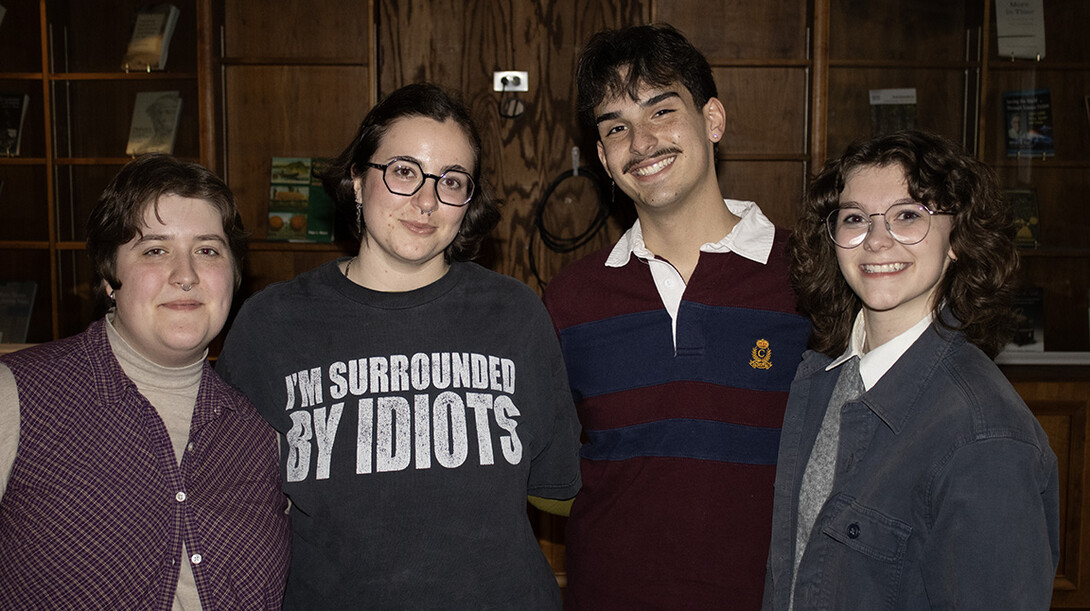
The executive editorial team — Hardy, Yelden, Andrés López and Vivian Landis — have all drawn inspiration from serving on the "Laurus" production team and as published contributors. They hope the digitization raises visibility on campus and beyond and inspires the next generation of writers. Being part of "Laurus," they said, can be affirming for fledgling editors, writers and artists.
For López, who started college as a journalism major before switching to creative writing, publishing poetry in "Laurus" helped him gain confidence. He recently learned one of his poems will appear in Tough Poets Review.
“My freshman year, I submitted five pieces, and I think all of them were accepted. I ended up winning a poetry award,” López said. “I thought, ‘Wait, maybe I’m actually not as bad as I think I am.’ Since then, I’ve published more, and I don't think that ever would have happened without 'Laurus.'”
Yelden said she enjoys seeing the evolution of student writers over time.
“I love that it's all student run and student work,” she said. “We're at such peak times in our lives. This is a window into those changes and the stories we tell about them.”
The digitization will also offer a roadmap of literary and art trends over four decades, López said.
“We're seeing some of the most experimental work out there in these issues,” he said. “We're seeing the next era of literature and art before the masses get to enjoy it. It’s such a beautiful process to be a part of.”
Share
News Release Contact(s)
Related Links
Tags
High Resolution Photos
HIGH RESOLUTION PHOTOS
HIGH RESOLUTION PHOTOS
HIGH RESOLUTION PHOTOS