Children visiting the University of Nebraska State Museum-Morrill Hall will soon be able to unearth a lifelike fossil through a partnership with the Frontier Tech Lab at Nebraska Innovation Studio.
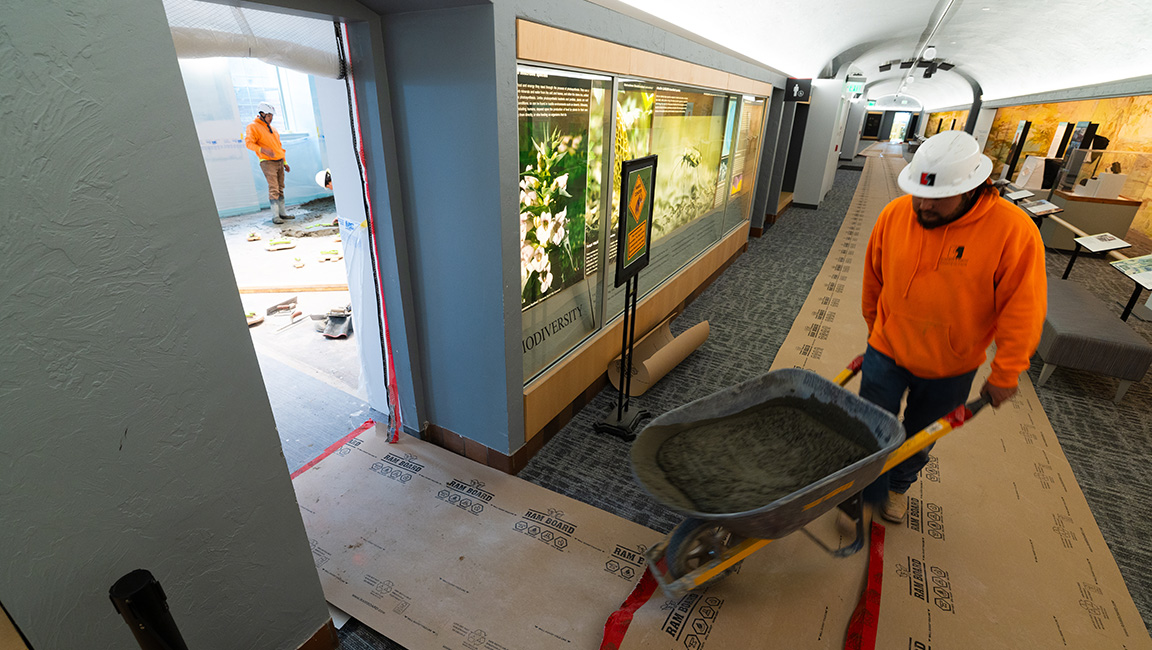
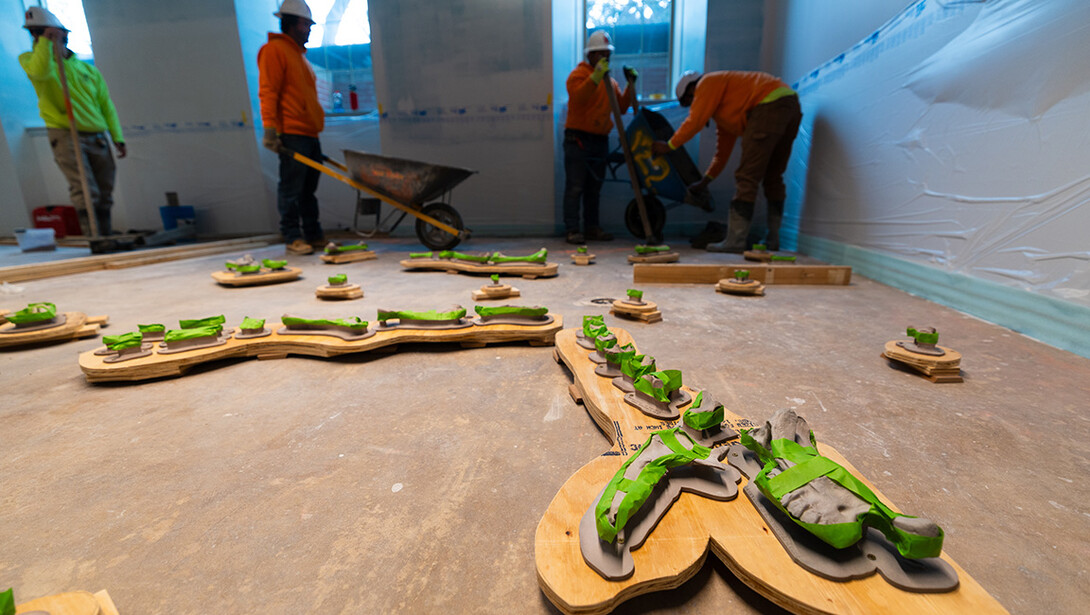
The lab helped recreate a fossil bed for the museum’s Paul D. and Betty Marx Discovery Center renovation, set to open in June. The renovation is adding more hands-on activities themed around nature’s engineers, including more “buried” fossil bones of Menoceras, a rhino species from the Miocene era discovered at Agate Fossil Beds near Harrison, Nebraska.
Frontier Tech Lab launched in October 2025 as a full‑service prototyping, design and fabrication center, harnessing Innovation Studio’s equipment and expertise. The lab works with campus units, municipalities, businesses and individuals.
To recreate the fossil bed, the museum needed more than 100 lifelike fossilized bones. The Frontier Tech Lab was a perfect fit for the project. The museum previously leaned on Nebraska Innovation Studio expertise for small elements, including a recreation of a rare beetle, in the Cherish Nebraska exhibition, and small casts of fossils for a different exhibition.
“Those were great small projects, because we got used to working together,” Weller said. “They're very collaborative. We enjoy their dedication to precision so the items they're creating look like the real thing, which is important.”
The new exhibition required careful collaboration, too. Weller explained that the fossil replicas needed to be true to life and scientifically accurate. They also must be durable enough to last through years of play by children. Frontier Tech Lab delivered on every front.
“They worked closely with our scientists to create the bones and ensure they were placed in the correct order and orientation,” Weller said. “There are many tiny bones when you think about the vertebrae or toe bones, and they can get very confusing to those of us who don't work with those bones. (Frontier Tech Lab staff) went above and beyond, and they delivered everything on time and on budget.”
The specimens were scanned by museum staff to create the digital models and then produced using SLS nylon 3D printing and dyed to closely match the color of real bone, with reference samples used for accuracy. The bones took several months to print and dye and were recently laid in concrete. Soon, they will be covered by a sand-colored, playground rubber mulch material that children can play and dig in.
Without Frontier Tech Lab, Weller said the museum would have relied on an outside company, which likely would have taken more time and more expense.
“There’s something highly valuable to being face to face and able to hold the prototype and discuss changes — there’s an immediacy in feedback, not shipping things back and forth,” Weller said. “It’s unusual to have access to this for a smaller museum, and it’s an awesome way to make or enhance exhibits.”
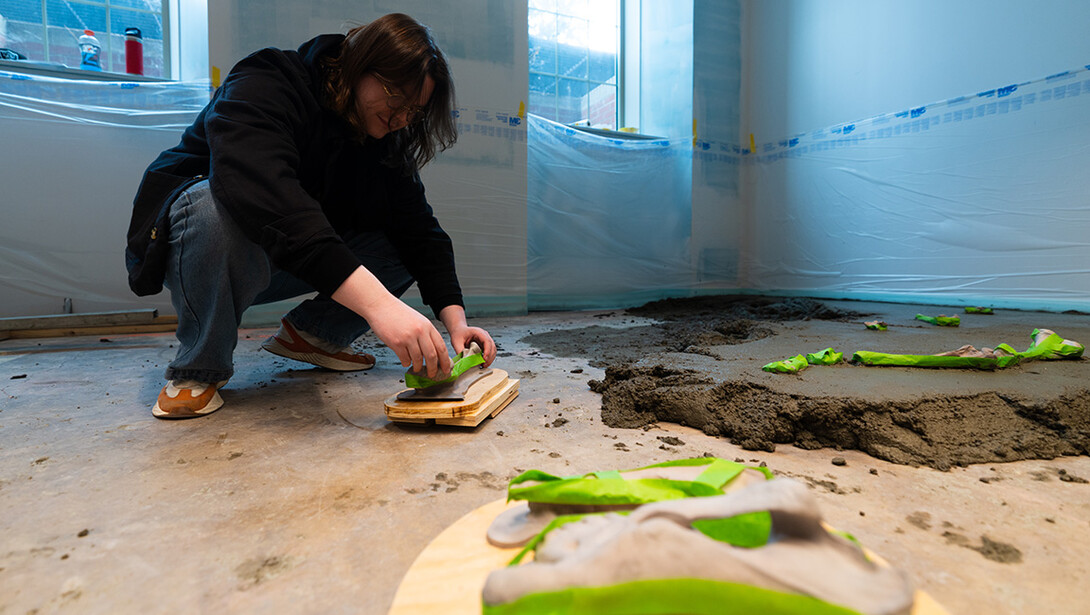
Isaac Regier, who coordinates Frontier Tech Lab, said that like the museum, Innovation Studio has previously worked with campus entities on projects. The creation of the lab streamlines the process and has dedicated staff to oversee each project.
“Innovation Studio has been around for 10 years, and we’d often get requests from people who didn’t have the equipment or the skill set to create something they needed,” said Regier, program coordinator with Nebraska Innovation Studio. “We have all the expertise of staff who know how to run these machines, design for these machines, and we are also able to train interns and student workers on the job.”
The lab employs five student interns. Those interns, majoring in engineering or architectural fields, are getting real-world experience not replicable in a classroom. The interns are paired first with most clients and help lead the projects.
“They’re learning the professional and fabrication side of things, and I think that puts them ahead of their peers in the future,” Regier said.
Frontier Tech Lab services are available to both campus and business entities. To start a project, fill out the online form or contact Regier at iregier2@unl.edu.
Share
News Release Contact(s)
Related Links
Tags
High Resolution Photos