The value of agricultural land in Nebraska declined 1% over the past year to an average of $3,905 per acre as of Feb. 1, according to the preliminary report from the University of Nebraska–Lincoln’s 2025-26 Farm Real Estate Market Survey. It is the second consecutive year of declining land values since the market reached $4,015 per acre in 2024.
The survey’s preliminary report was published March 18 by the university’s Center for Agricultural Profitability, based in the Department of Agricultural Economics. It provides current estimates of agricultural land values and cash rental rates, broken down by region and land class across Nebraska.
Land industry professionals who participated in this year’s survey attributed the decline to lower crop prices, higher farm input costs and prevailing interest rates.
“Many operations are facing tighter liquidity as crop revenues decline while input costs remain elevated,” said Jim Jansen, extension agricultural economist who leads the annual survey and report. “Those conditions are leading producers and lenders to take a more cautious approach when navigating these financial pressures.”
Crop receipts in Nebraska declined by about $576.6 million, or 16%, in 2025 as corn prices fell and soybean and wheat production dropped. Those losses were partially offset by a $3.22 billion increase in livestock receipts statewide. Jansen said the differences in crop and livestock profitability were reflected in land value trends across the state.
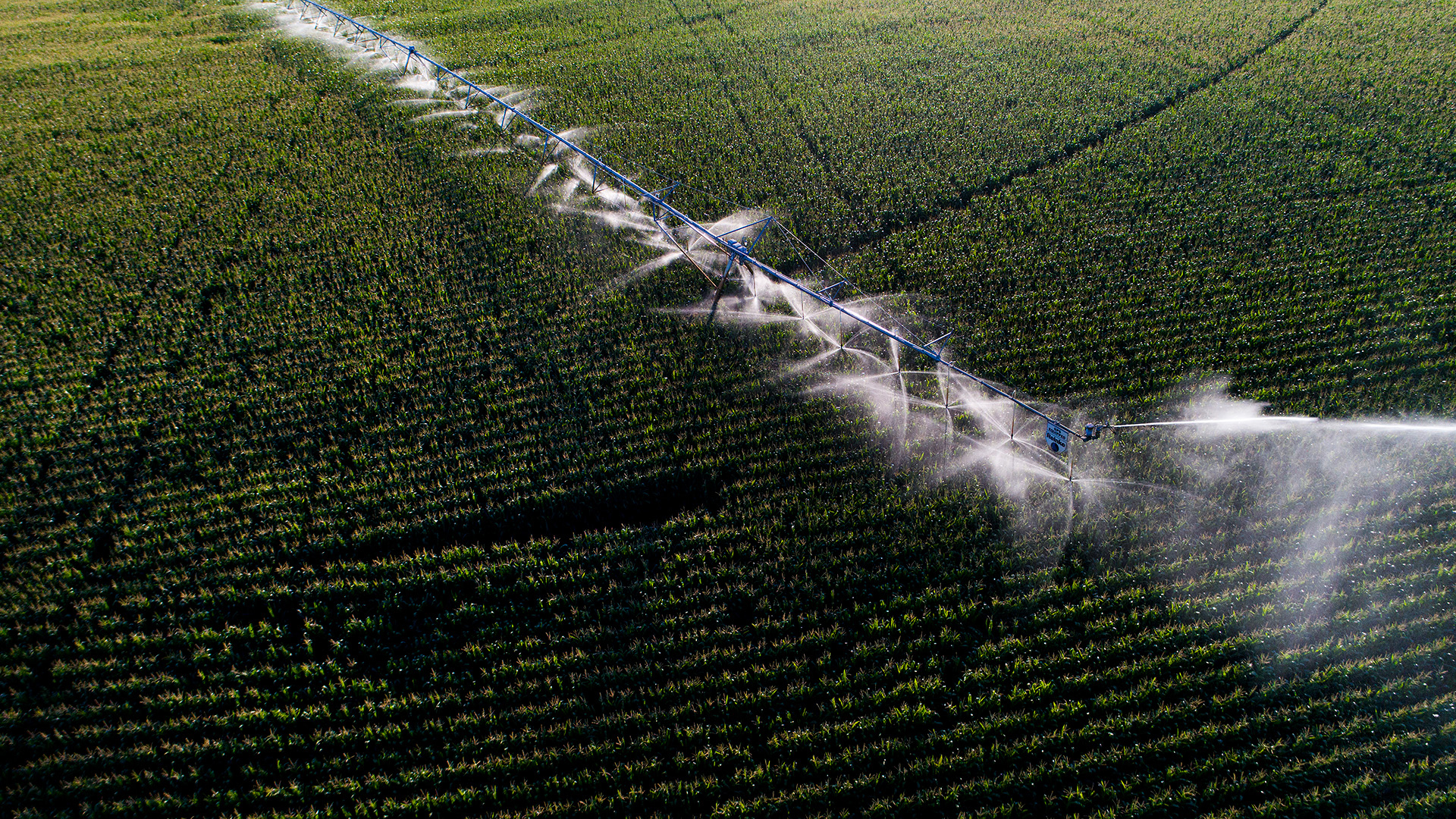
The report found cropland values generally declined across Nebraska over the past year as tighter crop margins weighed on land markets. Center pivot irrigated cropland averaged 2% lower statewide, while gravity irrigated cropland declined 3%. Dryland cropland with irrigation potential fell 2%, and dryland cropland without irrigation potential decreased 1%. In contrast, grazing land and hayland values increased between 4% and 7% as strong cattle prices supported demand for pasture acres.
Average cash rental rates in Nebraska followed a similar trend. Rental rates for dryland and irrigated cropland declined between 1% and 9% across the state, reflecting lower commodity prices and tighter margins for crop producers. In contrast, rental rates for pasture and cow-calf pairs increased about 4% to 5% compared with the previous grazing season.
“Flexible lease provisions can help landowners and tenants manage production and price risk when margins are tight,” Jansen said. “Factors such as crop prices, input costs and drought conditions all play a role in how lease agreements are structured.”
The Nebraska Farm Real Estate Report is available on the Center for Agricultural Profitability website here. Two virtual workshops covering 2026 land values, cash rental rates and leasing strategies will be held March 24 and 26. Registration is free at the webpage above.
The Nebraska Farm Real Estate Market Report is the product of an annual survey of land professionals, including appraisers, farm and ranch managers and agricultural bankers. Results are divided by land class and agricultural statistics district. Land values and rental rates in the report are averages of survey participants’ responses by district. Actual land values and rental rates may vary depending on the quality of the parcel and local market for an area. Preliminary land values and rental rates are subject to change as additional surveys are returned. The final version of the report will be published in July.
Share
News Release Contact(s)
Related Links
Tags
High Resolution Photos